How the world's best luxury fashion brands reduce costly mistakes, preserve craftsmanship, and create exceptional products through organized documentation.
In luxury fashion, beautiful garments are not created through inspiration alone. They are created through clarity, precision, and an organized development process that allows every artisan, technician, and production partner to understand exactly what must be made.
At Giardina Atelier, one of the most common questions we receive from brands beginning the garment development process is whether they can schedule a video call to review all changes together. The answer is absolutely yes — when the project reaches the appropriate milestone. Video meetings are an incredibly valuable part of luxury fashion development. They allow designers, technical teams, couture patternmakers, and production specialists to discuss creative direction, solve complex construction challenges, and clarify details that may be difficult to explain through writing alone.
However, a video call should never become the official record of a development project. Whether a brand is developing a couture evening gown, luxury swimwear, lingerie, tailoring, knitwear, or ready-to-wear, every important design decision must ultimately exist in one centralized place: written documentation.
This is one of the most important differences between amateur product development and professional luxury fashion manufacturing.
Luxury Fashion Is Built on Documentation
One misconception many emerging brands have is believing that a development project is simply an ongoing conversation between themselves and an atelier or manufacturer. In reality, luxury garment development passes through many highly specialized hands. A single style may involve technical fashion designers, couture patternmakers, sample makers, embroidery artisans, fabric sourcing specialists, production coordinators, quality control teams, and manufacturing partners.
Not every person involved attends every meeting. Not every artisan speaks the same language. Not every department receives information at the same moment. For this reason, documentation becomes the backbone of the entire garment development process. Without clear written records, communication can quickly become a game of telephone, where each person receives only part of the message and important details become diluted along the way.
For a startup fashion brand, this can be especially costly. Early-stage brands are often building their technical foundation for the first time, and without organized documentation, small misunderstandings can quickly become expensive delays, incorrect samples, unclear approvals, or production issues. Professional luxury fashion development depends on one essential principle: every important decision must be documented clearly enough that the entire team can understand it, repeat it, and execute it.
Every Missing Note Creates Opportunity for Misinterpretation
Luxury manufacturing depends on precision, and precision depends on language that is clear, specific, and impossible to misunderstand. A designer may say during a call, "Let's make the neckline a little softer," but without written explanation, that instruction can be interpreted in many different ways. Does "softer" mean lower, wider, less structured, more curved, lightly interfaced, or simply less severe in proportion? Does it refer to the fabric tension, the seam finish, the shape of the pattern, or the overall visual feeling of the garment?
Without photographs, annotations, technical notes, and written confirmation, every person involved is forced to interpret what was meant. Interpretation is the enemy of consistency. The more information travels verbally between people, departments, languages, and countries, the greater the chance that something important will be misunderstood.
This is why professional fashion factory communication must be structured, written, and traceable. In luxury clothing production, even a small misunderstanding can affect the final garment. A neckline, sleeve shape, hem balance, corset structure, lining finish, embroidery placement, or seam construction may all depend on precise communication. Great craftsmanship cannot protect a project from unclear instructions.
Written Feedback Protects Your Brand
Many brands assume documentation exists primarily to help the factory, atelier, or manufacturer. In reality, it protects the designer even more. Every written email creates a permanent development history, allowing the brand to revisit decisions with confidence long after the original conversation has passed.
Months later, a brand should be able to answer important questions without relying on memory. Why was the collar changed? Which zipper was finally approved? Which sleeve version fit best? Which fabric was rejected? Which prototype became the production sample? Which construction method worked? Which measurements were finalized? When feedback is properly documented, these answers already exist.
This is how a brand begins building one of its most valuable assets: its technical archive. The world's most respected luxury fashion houses maintain extensive archives because great products evolve over time. Every pattern, sample, fitting note, fabric decision, construction method, and approval becomes part of the brand's long-term technical identity.
For a serious luxury brand, this archive becomes essential not only for the current collection, but also for future development, production consistency, fit continuity, and brand refinement. Documentation preserves the evolution of the product and allows craftsmanship to improve with every stage.
Great Development Is Never Hidden Inside WhatsApp Messages
One of the biggest risks in fashion product development today is fragmented communication. Feedback often arrives through WhatsApp messages, voice notes, Instagram messages, screenshots, text messages, video calls, and emails. At first, this may feel fast and convenient, but over time it becomes increasingly difficult to know which version is the correct one.
One correction may contradict another. Old photos may remain in circulation. Different people may reference different conversations. Eventually, confusion replaces clarity, and the development process becomes slower, more expensive, and more vulnerable to error.
This is why, at Giardina Atelier, we ask our clients to consolidate all official development feedback into organized email documentation with clearly labeled notes and annotated photographs. This is not because we are inflexible. It is because we are protecting the project.
A couture atelier or luxury clothing manufacturer can only execute at the highest level when the information guiding the work is clear, complete, and centralized. Luxury does not thrive in scattered messages. Luxury requires order.
Every Correction Should Be Impossible to Misunderstand
One of the best habits a luxury fashion brand can develop is asking whether someone who has never seen the garment could understand exactly what is required from the notes alone. If the answer is no, the documentation is incomplete.
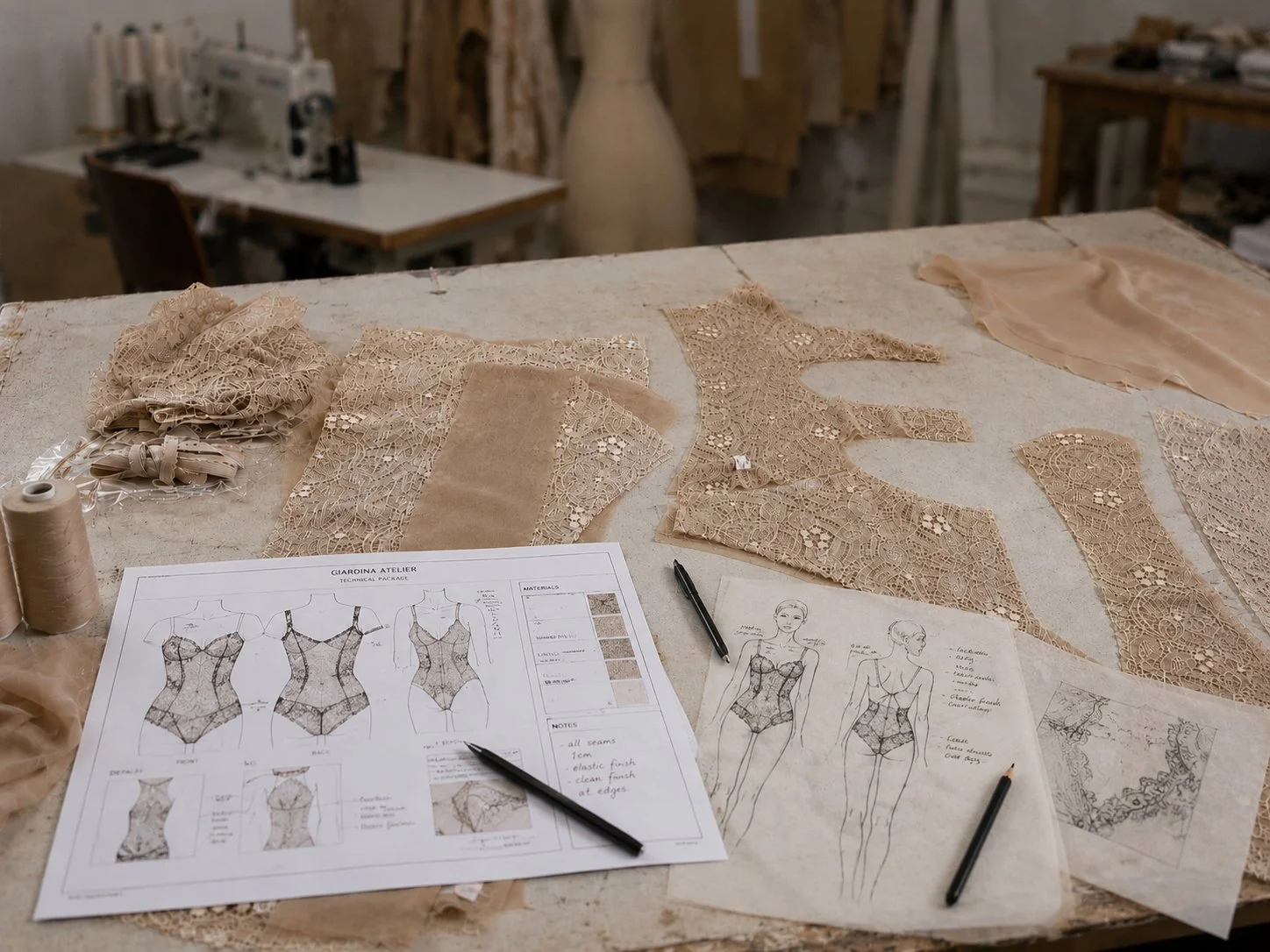
Excellent written feedback should include clearly organized notes, numbered correction lists, annotated photographs, close-up images where necessary, construction references, inspiration images, measurement clarifications, and confirmation of final approvals. Every correction should remove ambiguity. The goal is to make the designer's intention impossible to misinterpret.
This is especially important during fashion tech pack creation, couture patternmaking, prototype development, and sample development. These stages form the technical foundation of the final product. When the foundation is unclear, every later stage becomes more vulnerable to error. A luxury tech pack, couture pattern, fitting note, prototype correction, and final sample approval should all work together as one continuous technical record.
International Manufacturing Requires Even Greater Precision
Luxury fashion is increasingly global. A designer in New York may work with an Italian atelier. An Italian patternmaker may communicate with a European sampling team. Production may involve multiple specialist suppliers, artisans, fabric mills, embroidery houses, or small-batch manufacturing partners. In many cases, information must also be translated between languages before the work can begin.
Every additional translation increases the importance of written technical documentation. Written instructions allow technical teams to verify details, translate accurately, revisit previous decisions, and maintain consistency throughout the garment development process. Verbal conversations simply cannot provide the same level of reliability once multiple teams become involved.
This is one of the reasons organized documentation is essential when working with a Made in Italy clothing manufacturer or couture atelier. The more refined the product, the more precise the communication must be.
The Better Your Documentation, the Better Your Samples
Many brands assume poor samples always indicate poor craftsmanship. Sometimes that is true, but sometimes the issue begins much earlier. If the information handed to a factory, atelier, or sample development team is incomplete, the team must make assumptions. Assumptions create variation, variation creates revisions, revisions create delays, and delays increase development costs.
One of the most overlooked ways to improve sample quality is simply improving the quality of the information provided. The clearer the documentation, the more accurately skilled artisans can execute the designer's vision.
This is especially important for startup fashion brands entering luxury garment development for the first time. Many emerging designers have strong creative direction, but they may not yet understand how much technical clarity is required to transform an idea into a production-ready garment. A beautiful reference image is not enough. A conversation is not enough. A moodboard is not enough.
Luxury fashion development requires structured documentation, fashion tech packs, technical notes, material direction, fit references, sample corrections, and final approvals. Creativity gives the garment its soul, but documentation gives it the ability to be made correctly.
Documentation Is Part of Luxury Craftsmanship
At Giardina Atelier, craftsmanship does not begin when fabric is cut. It begins when information is organized. Every luxury tech pack, couture pattern, prototype, sample, approval, and revision contributes to the complete technical history of a garment.
That history becomes one of the most valuable assets a brand owns. Luxury fashion is not built on conversations alone. It is built on precision, repeatability, and documentation. Exceptional craftsmanship deserves exceptional communication.
About Giardina Atelier
Giardina Atelier is an Italian luxury fashion atelier specializing in Made in Italy garment development, luxury fashion tech packs, couture patternmaking, prototype and sample development, and small-batch luxury clothing production.
Working with emerging and established premium brands worldwide, Giardina Atelier combines heritage Italian craftsmanship with meticulous technical documentation to transform creative concepts into production-ready collections.
From the first technical foundation to final luxury garment development, our atelier supports brands through a clear, structured, and highly considered fashion product development process designed to protect quality, preserve craftsmanship, and bring exceptional garments to life. If you are building your own, start with a brief.