It is the question every founder asks, often quietly, and usually too late: how much will this actually cost? The internet is full of totals that mean very little, because a silk evening gown and a cotton T-shirt live in different worlds.
So rather than invent a single number, this guide walks through each cost a luxury fashion startup will meet, in the order it arrives, and explains what drives it. Where we can, we share our own prices, so you have something real to plan with.
1. Technical development: the tech pack and the pattern
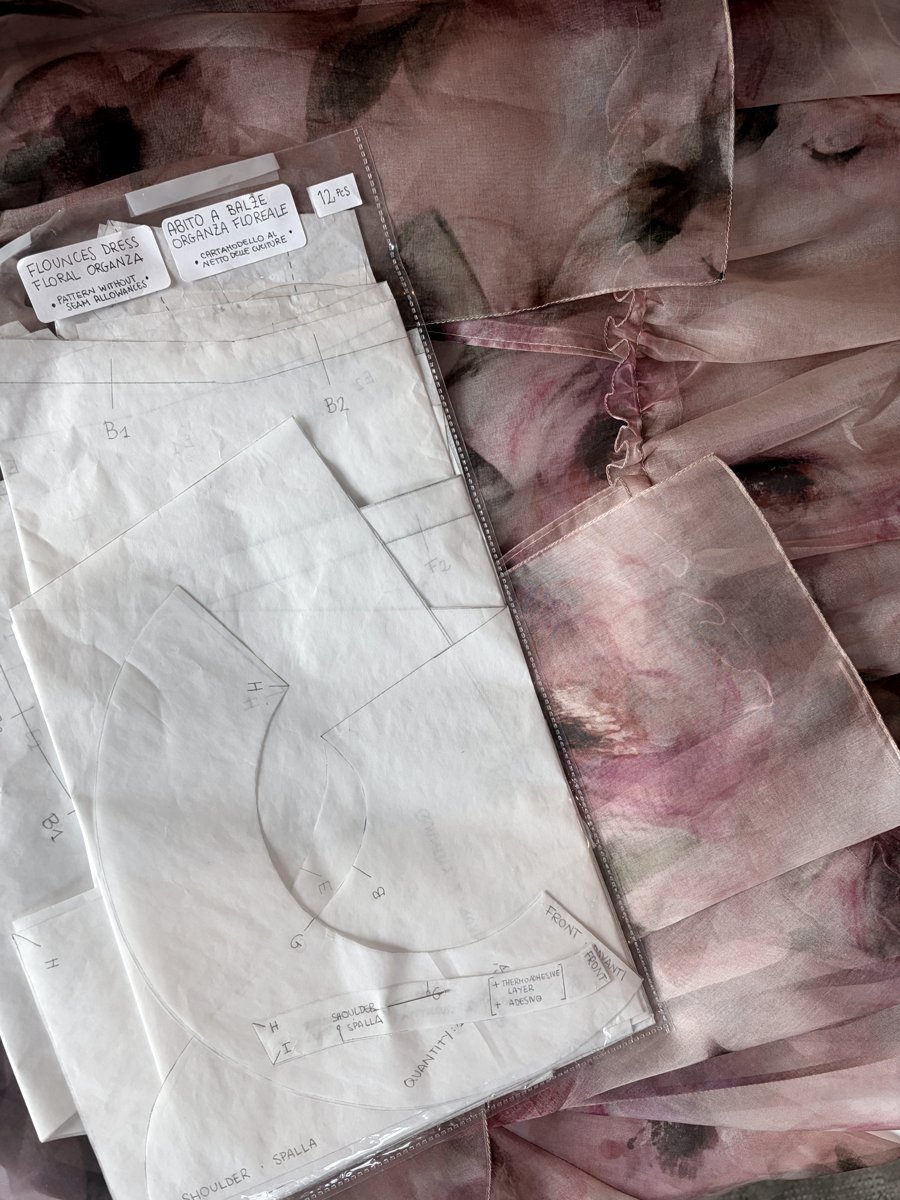
This is the first real cost of making clothes, and the one that decides how much everything after it will cost.
- Tech pack cost: prices vary enormously, from template documents to detailed technical files. What matters is whether the measurements come from a real pattern. A Couture Tech Pack at Giardina Atelier is €499 per style.
- Pattern making cost: a hand-sculpted, hand-drafted Couture Pattern, made in the heritage Alta Moda moulage method, is €1,500 per style, with courier shipping of the paper pattern included.
- Both together: our Technical Foundation, the tech pack and pattern developed in tandem so each reflects the other exactly, is €1,999 per style. It is a flat fee regardless of complexity, and it is a one-time cost per style: you own it and never pay for it again.
Each garment counts as its own style. A jacket and skirt sold as one look are two patterns and two tech packs, because each garment is engineered independently.
For collections, two offers apply to the Technical Foundation. From four styles, you can pay 50% to begin and the remaining 50% once your styles are complete and you have approved them on the mannequin, before we ship. And when you order ten, your eleventh Technical Foundation is included at no charge.
2. Sampling: what a clothing sample costs
A sample is billed per round. As a guide, our samples begin at around €299 per garment, and typically fall between €299 and €499 per round including Alta Moda hand finishes, with complex eveningwear sitting higher. The exact figure is confirmed once the pattern and tech pack are complete, because only then is the construction truly known.
Most styles take one or two rounds. Each further round is charged only for sewing the sample; the pattern is never charged again. Fabric is not included in the sample price; it is sourced within your budget during sample development. As we explain in Why luxury fashion development cannot be rushed, a first sample is rarely the last.
3. Fabric and trims
Materials are often the most variable cost of all. Italian silks, fine wools and specialist laces can change a budget dramatically. The most accurate way to price them is during sampling, when fabric consumption can be measured from the real pattern.
4. Grading
Once your sample and pattern are approved, the pattern is graded into your size range. This happens after sampling, right before production. As a guide, grading runs at around €150 per size, depending on the pattern.
5. Production
Production cost per piece depends on construction, finishes, fabric and quantity. In luxury, much of the work is done by hand, so the true labour time is only known after sampling. Any honest atelier will give you an indicative range at that stage, not before. Quantities matter too, which is why it is worth understanding minimum order quantities early.
Production typically takes 6–8 weeks, and is billed 50% upfront to begin and 50% on completion, before shipping.
6. Everything around the clothes
Beyond the garments themselves, a brand launch will usually include branding, labels and packaging, photography, a website, shipping and duties, and legal basics such as trademark registration. These vary so widely by market and ambition that they are best budgeted with local professionals.
Where founders lose the most money
The most expensive line in many fashion budgets is one nobody planned: repeated sampling. When a factory works from an incomplete tech pack, every misunderstanding becomes another round. Three or four unnecessary samples can easily cost more than doing the technical work properly at the start.
Investing in a complete technical foundation does not add cost. In most cases, it is what keeps the rest of the budget under control.
How to plan your budget
- Develop several styles together so they share one fit language, then sample only the ones you are ready for.
- Keep a reserve for a second sample round on each style.
- Price materials during sampling, not before.
- Treat production prices as indicative until your sample is approved.
Full details of our prices and process are on our FAQ and pricing page. When you are ready, the first step is the Technical Foundation.